

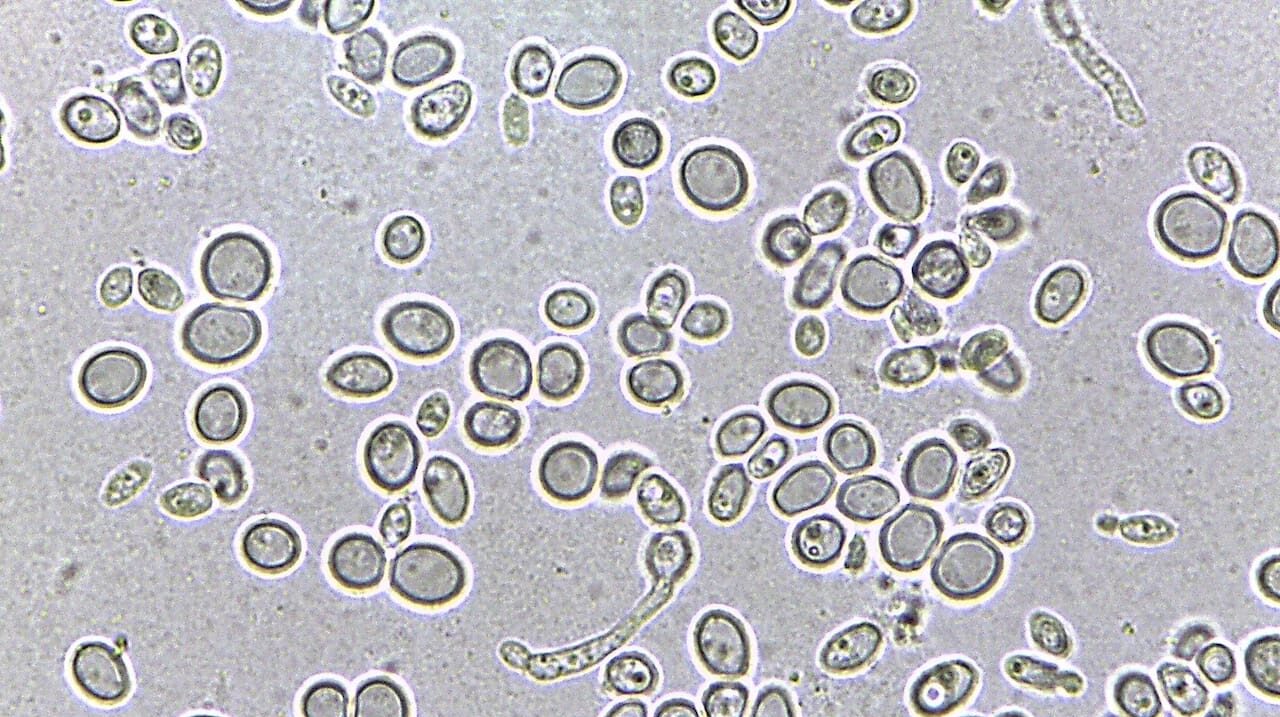
A yeast infection could be harming your memory
By naturopath Margaret Jasinska
A new study found that Candida albicans can cross into the brain, trigger inflammation, and produce structures that look a lot like the plaques seen in Alzheimer’s disease.
This finding is from research published in Nature Communications, Baylor College of Medicine
All of us have some Candida albicans in our body. It’s a yeast that lives in the gut, the mouth, and the vagina, and for most people it never causes trouble beyond the occasional bout of thrush, abdominal bloating and sugar cravings. A new study in mice suggests this everyday organism may be capable of something far more surprising: slipping past the brain’s defences and leaving behind changes that resemble early Alzheimer’s disease.
In the study, 25,000 yeast cells were injected into the mice’s bloodstream. Enough to reach the brain but not enough to cause severe illness. The blood-brain barrier was crossed. This is normally supposed to be the brain’s main defence against pathogens in the blood. Memory loss was temporary. It reversed once the infection cleared.
Doctors have noticed that fungi are increasingly linked to respiratory problems like asthma, and to sepsis, the body’s sometimes life-threatening overreaction to infection. Both of those conditions have separately been linked to a higher risk of dementia later in life.
What the researchers did
Dr. Corry’s team tested several doses of C. albicans in mice, trying to find a level strong enough to affect the brain without making the animals seriously ill. They settled on 25,000 yeast cells, delivered directly into the bloodstream.
What happened next surprised even the researchers. The team had assumed the blood-brain barrier would hold the yeast back. It didn’t. “We thought that yeast would not enter the brain, but it did,” Dr. Corry said.
Once inside brain tissue, the yeast set off a response from microglia, the brain’s immune cells. “The cells became very active, ‘eating and digesting’ the yeast,” Dr. Corry explained. “They also produced a number of molecules that mediated an inflammatory response, leading to the capture of the yeasts inside a granule-type structure inside the brain.”
The researchers gave this structure a name: a fungus-induced glial granuloma, or FIGG. Think of it as the brain building a wall around an intruder it can’t fully clear.
As these FIGG structures formed, amyloid precursor protein and amyloid beta (the same proteins that clump together to form the plaques seen in Alzheimer’s disease) started collecting around the trapped yeast cells.
Did the mice actually lose their memory?
Yes but not permanently. Mice with the infection performed worse on spatial memory tests than uninfected mice. Once their immune systems cleared the yeast, though, memory returned to normal. Memory changes occurred with active infection and inflammation, rather than permanent brain damage, at least in this short-term study.
This study was done in mice, using yeast injected directly into the bloodstream at a controlled dose. It doesn’t show that ordinary Candida living in a healthy person’s gut or mouth will travel to the brain or cause dementia. It’s an early, animal-based finding that opens a research question, not a diagnosis of what’s happening in humans.
According to the study authors: “We are currently exploring the possibility that fungi could be involved in the development of chronic neurodegenerative disorders, such as Alzheimer’s, Parkinson’s, and multiple sclerosis.”
What about in humans?
It is not ethical to conduct a study like this in humans. What is interesting to me is that a lot of people live with a chronic yeast infection and don’t know it. People with a weakened, suppressed immune system, those who eat a lot of sugar and people with autoimmune disease often have abnormally high levels of yeast in their body. Yeast overgrowth in the gut can create a leaky gut, allowing gut wastes as well as yeast and bacteria into the bloodstream. From there they could make their way past the blood brain barrier.
Possible symptoms of Candida overgrowth
- Vaginal thrush
- Candida can also be a possible cause of recurrent cystitis, when urine tests are negative for bacteria.
- Thrush in the mouth presents as a sore white coated tongue or throat.
- When the skin is affected, a red itchy rash may appear.
- In the intestine, candida can cause bloating, crampy pains, excessive flatulence or burning in the stomach. There may be itching around the anal area.
- Strong sugar cravings are a typical symptom.
- Candida infection can disturb sleep quality by causing a leaky gut and overloading the liver with toxins.
- If Candida proliferates in the intestine, it can change its form from yeast buds to an elongated fungal form with root-like projections that attach to the intestine wall. This may open channels directly into the bloodstream, and may result in the absorption into the blood of partially digested food particles as well as yeast.
How to help Candida infections
- Avoid yeast, alcohol and sugar. Also avoid dried fruits, peanuts, melons and any fruit that is moldy. It is not necessary to avoid all fruit but intake should be limited to 2 servings per day. Nature Sweet is a safe sugar alternative that does not encourage Candida growth.
- It is best to avoid dairy products and gluten because these foods increase intestinal permeability (leaky gut syndrome) and will worsen the symptoms. Glutamine is one of the best natural remedies for repairing a leaky gut because your intestinal cells use it to repair themselves.
- Your diet should be high in healthy fats from pastured animals, ghee, wild seafood, nuts, seeds, avocado and coconut oil. There are powerful herbal formulas that help to reduce Candida and other unwanted microbes in the gut. Contact us if you would like to speak to a naturopath or nutritionist.
- Foods that have natural antibiotic properties will fight Candida effectively if they are eaten regularly. The best ones are raw garlic (finely chopped, grated or juiced), raw ginger, onions, leeks, and radishes, cruciferous vegetables (broccoli, Brussels sprouts, cauliflower, cabbage) and cinnamon. Fresh garden herbs can fight Candida if they are eaten regularly – the best are thyme, oregano and rosemary. These foods are also very beneficial for the liver.
- Anyone with a Candida infection will develop an unhealthy, sluggish liver. This is because whenever there is a leaky gut, the liver bears the brunt of all the bowel toxins. The liver is the first stop for all blood flowing from the intestines. An overwhelmed liver will not be able to cleanse and purify your bloodstream well. This can lead to symptoms such as fatigue, foggy head, weight gain and allergies. There is a lot of helpful information in the book Fatty Liver You Can Reverse It.







Leave A Comment