

Bright nights equal higher breast cancer risk
By naturopath Margaret Jasinska
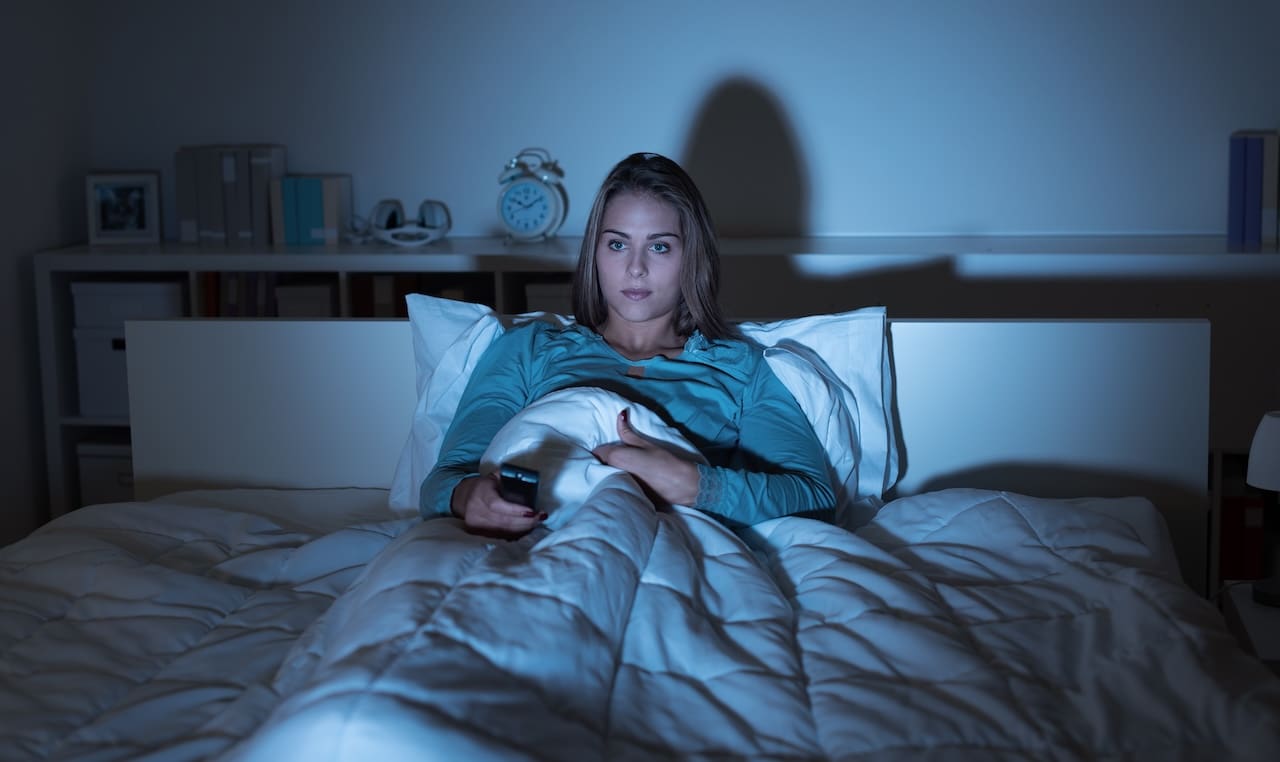
A landmark study suggests how dark your bedroom is at night may influence a hormone pathway linked to breast cancer. This is one reason why people who work night shift usually have poorer health than those fast asleep at night.
For most of human history, night meant darkness. Now it rarely does; streetlights outside the window, a phone screen at 2am, a hallway light left on for the kids. Researchers have long wondered whether this shift has a biological cost. One influential study looked specifically at breast cancer, and what it found adds real weight to the idea that darkness itself, not just sleep, matters for health.
Melatonin
Melatonin is a hormone made by the pineal gland, a pea-sized structure deep in the brain. Its production follows a strict schedule set by light: levels stay low during the day, rise after dark, peak in the middle of the night, and fall again toward morning. It’s one of the body’s most reliable internal clocks.
Melatonin does more than help you feel sleepy. Laboratory research has shown it can suppress the ovaries’ production of oestrogen. Since prolonged, elevated exposure to oestrogen is an established risk factor for breast cancer, scientists proposed a chain reaction: light at night → less melatonin → more oestrogen → higher breast cancer risk. This study set out to determine whether this holds up in real people, not just in the lab.
Melatonin normally peaks during the late night hours. Light exposure during this time, from a lit room, a screen, or a shift-work schedule can blunt that peak.
The Study
The research team compared 813 women recently diagnosed with breast cancer to 793 women without the disease, matched by age. Instead of asking about light exposure in the abstract, they asked detailed, practical questions: How dark is your bedroom? Do you wake during the night? If so, do you turn on a light? Have you worked graveyard shifts, and for how long? 10 years of data was analysed.
The Findings
Not every kind of nighttime disruption carried the same risk. That distinction is one of the most useful parts of this research. The highest risk came from being awake during peak melatonin hours (11pm to 3am). Each additional night per week of being awake during the body’s normal melatonin peak was linked to a 14% increase in breast cancer risk. Working overnight shifts was linked to 60% higher risk, and risk climbed further with more years and more hours per week on that schedule.
Women who described their bedrooms as the brightest showed a significant trend toward increased risk, consistent with melatonin-suppression. Waking briefly and switching on a light was associated with a minimal risk of breast cancer.
Deep, long and uninterrupted sleep is best for your health
It isn’t sleep disruption alone that matters, but sustained exposure to light during the hours your body expects darkness. A brief light exposure during the night doesn’t meaningfully blunt melatonin production for the night. However, being exposed to some light during the hours melatonin should be at its peak, or working through the night for years, causes a sustained disruption of melatonin production. The distinction between “brief” and “sustained” appears to be the difference that shows up in the results of this study.
How to improve melatonin production
- Aim for genuine bedroom darkness: Blackout curtains, dimming hallway lights, and turning phone screens face-down can reduce ambient light during sleep hours.
- Use blue light blocking glasses if looking at screens after sunset and use software that enables night mode on your screens. Looking at bright screens at night blocks melatonin production.
- Don’t worry about occasional wake-ups: A quick light switch-on for a bathroom trip wasn’t linked to higher risk in this study. It’s sustained exposure that matters most.
- If you wake at night regularly, try to leave the light off. You may want to play some relaxing music or meditate instead of an activity that requires light.
Strategies that may improve your sleep
- Magnesium is a wonderfully relaxing mineral that almost no one gets enough of. Magnesium helps you feel calmer during the days, and sleep more deeply at night. The stress hormone cortisol increases loss of magnesium in urine. So does alcohol.
- Melatonin helps set a healthy circadian rhythm in your body. It is excellent for people who can’t fall asleep, shift workers and people who regularly change time zones. It requires a doctor’s prescription.
- Alcohol and sugar can both seriously disturb sleep quality. They both cause leaky gut and promote liver inflammation. That can cause poor quality, restless sleep and may cause over heating or sweating at night.
- Doing some exercise each day (not close to bedtime) can relax your muscles and nerves at night time and help you get better sleep.




Leave A Comment