

Important ways magnesium benefits your health
By naturopath Margaret Jasinska
Magnesium is a very important mineral for good health and you may not be getting enough. Magnesium helps your body with hundreds of important metabolic processes, and not getting adequate magnesium in your diet can cause some unpleasant symptoms. You can obtain magnesium from some foods, but you may not be eating enough of those foods, or absorbing magnesium properly.
How much magnesium do you need?
- Adult women need at least 310 milligrams of magnesium each day, and 320 milligrams after the age of 30.
- Pregnant women need an additional 40 milligram.
- Adult men under 31 need 400 milligrams per day and 420 milligrams if they are older.
Most of our patients are not getting enough magnesium.
Factors that raise the risk of magnesium deficiency
Stress and anxiety can leave your body depleted because the stress hormone cortisol increases urinary loss of magnesium. Elevated blood sugar due to diabetes or pre-diabetes also increases urinary magnesium loss. Stimulants such as caffeine and nicotine can deplete the body of magnesium.
Health problems that cause intestinal malabsorption such as coeliac disease, irritable bowel syndrome, SIBO (Small Intestinal Bacterial Overgrowth) and inflammatory bowel disease can inhibit the proper absorption of magnesium from food or supplements. Proton pump inhibitor drugs that are used for heartburn and reflux reduce the ability of the stomach to produce acid. This can lead to serious magnesium deficiency and these drugs are usually taken for life.
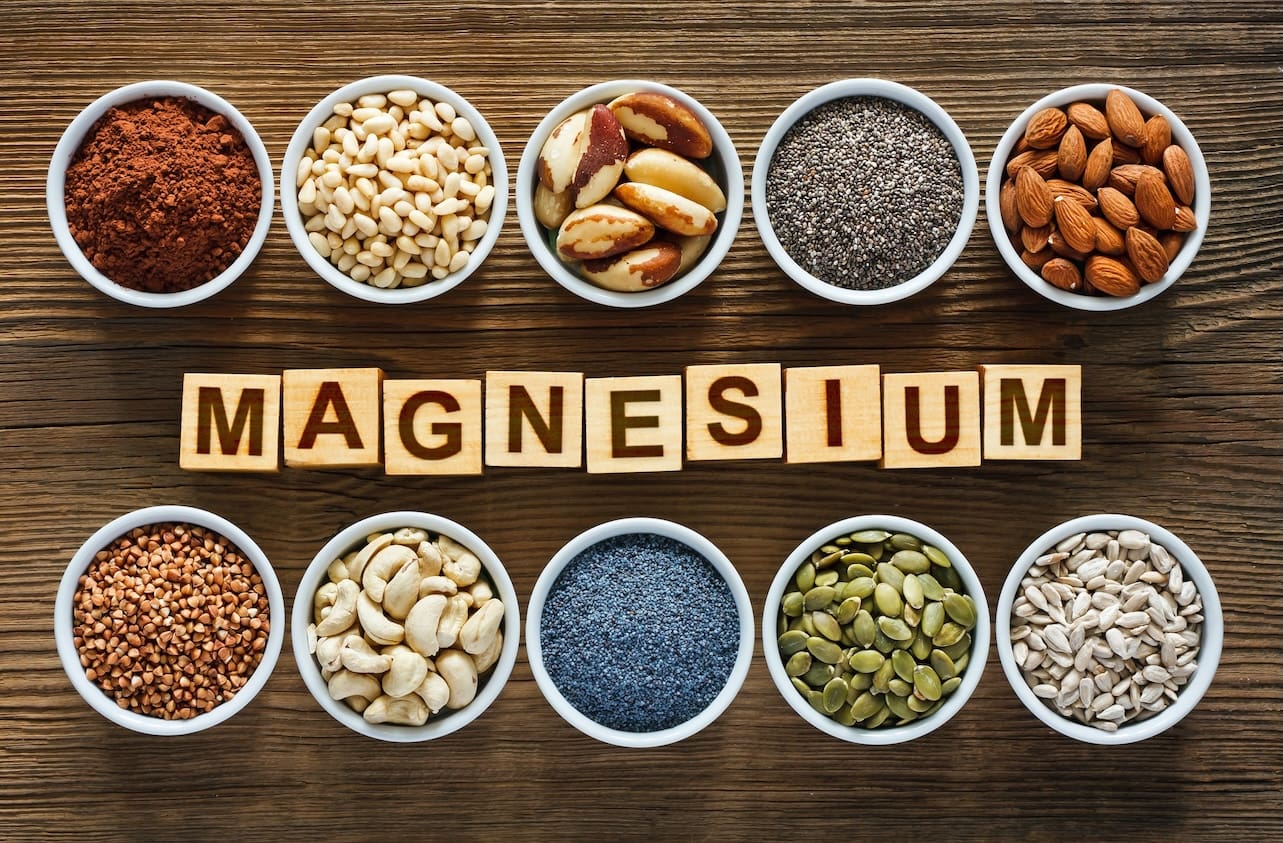
Foods high in magnesium
Dark green vegetables, nuts, seeds, legumes, meat, seafood and poultry. Many people are not able to meet their recommended daily intake of magnesium through their diet.
Benefits of magnesium

Muscle health
Magnesium is very important for healthy muscle contraction and relaxation. People who are low in magnesium can experience muscle cramps, spasms and twitches. Individuals who do a lot of exercise lose excess electrolytes (including magnesium) through sweat. Living in a hot and humid climate also increases magnesium loss via perspiration. Supplementing with magnesium can help to ease muscle cramps and spasms.

Relaxation of the nervous system
Magnesium supports nervous system health by regulating nerve transmission, calming the stress response and assisting in the production of the neurotransmitter GABA, which promotes relaxation and better sleep. Magnesium can reduce the negative impacts of stress on your body and help you handle life stress better.

Sleep support
Insufficient sleep, poor quality sleep and unrefreshing sleep are incredibly common and frustrating. Long term poor sleep can cause chronic low energy and poor mental health. It makes life more difficult and less enjoyable. Taking a magnesium supplement may give you relief from sleeplessness.

Headache relief
Magnesium can help to relieve headache symptoms, including tension and migraine headaches. It does this by relaxing muscles, regulating blood vessels, and influencing neurotransmitters. Studies have shown magnesium can help prevent headaches and reduce severity, especially menstrual migraines. Please see your doctor if you are experiencing new or worsening headaches.

Premenstrual syndrome relief
Magnesium can help relieve several PMS symptoms, including bloating, mood swings, irritability, anxiety and breast tenderness. Research has shown that women who are low in magnesium are more likely to experience worse PMS. Supplementing with magnesium can reduce symptoms by calming the nervous system and regulating the hormones oestrogen and progesterone.





Leave A Comment