


Your joints love collagen
By naturopath Margaret Jasinska
Collagen is a key structural protein in cartilage. It provides support, strength, and flexibility to your joints. If the collagen in your cartilage breaks down, this can lead to joint pain and stiffness. This will inevitably happen to all of us as we age, but you have a lot of control over how soon it begins and how quickly your cartilage deteriorates. Maintaining collagen levels is vitally important for your current and future joint health.
What is collagen?
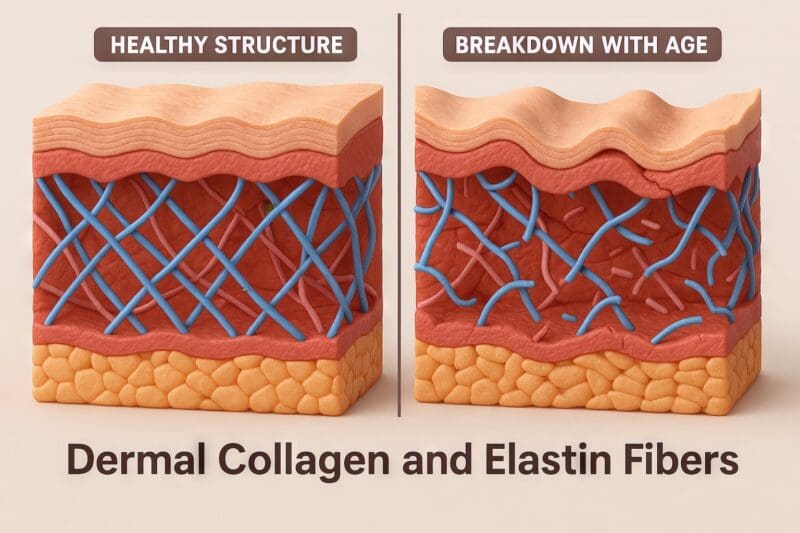
Collagen is the glue that holds your body together. The name collagen comes from the Greek language, meaning glue-producing. It’s a fibrous protein found right throughout your body. Your bones, joints, connective tissue, tendons, ligaments, nails and hair all contain collagen. Collagen is the main structural component of your skin; approximately 80 percent of your skin’s dry weight is collagen. There are more than a dozen different types of collagen, which have slightly different functions, but the majority of collagen in your body is known as Type 1. This is the strongest type of collagen.
As we age, collagen starts to break down
Beginning around age 35, collagen production naturally begins to slow down. By age 40 collagen starts to deplete faster than your body can reproduce it. This causes visible signs of ageing, but also weakens your body on the inside. Your gut lining may become compromised, your joints degenerate and your arteries may no longer be as flexible.
Collagen is formed from the amino acids glycine, proline and hydroxyproline. Glycine is the most abundant one. Amino acids are classed as essential (can’t be made in your body and thus must be obtained through diet) or non-essential (can be manufactured in your body).
Glycine is a non-essential amino acid because your body can make it from the amino acid serine. Your body produces approximately three grams of glycine per day. However, some research has shown that for optimal health your body actually requires around 10 grams per day. So ideally you’d obtain seven grams each day through your diet. Most people do not consume enough. Over the long term, this can result in insufficient collagen production. Glycine is found in collagenous cuts of meat, poultry and seafood, as well as collagen supplements. It is also found in poultry skin.
If your health is not optimal, you may not be producing enough collagen, and of course as we age, none of us make enough collagen. Research has shown that people with rheumatoid arthritis don’t produce adequate collagen. This can have disastrous consequences for the future health of their joints and requirement for joint replacement surgery.
Your body manufactures collagen, if you consume enough of the building blocks, but you can also obtain it through your diet. Collagen is found in animal foods: bones, connective tissue, skin, cartilage and tendons. Therefore cooking with cuts of meat with bone or sinew attached will help you obtain collagen in your diet. Bone broth is an excellent source of collagen and you should notice a big improvement in the quality of your joints, skin, hair and nails by consuming it regularly. The more gelatinous the bone broth becomes, the more collagen you’ll obtain from it. Gelatin is cooked collagen.
How collagen benefits your joints
Provides structural support: Collagen forms the scaffolding that supports connective tissue including cartilage, ligaments, and tendons, which maintain healthy joint structure and function.
Enables cartilage regeneration: Collagen provides the necessary amino acids to help repair and rebuild joint cartilage.
Provides protection and resilience: Collagen helps to make cartilage more resilient to wear and tear, protecting bones from rubbing against each other. Some wear and tear is normal with ageing, but it is accelerated in people with high inflammation and autoimmunity.
Helps with pain and inflammation relief: By maintaining adequate cartilage levels, collagen can help reduce joint pain and inflammation.
Most people aren’t getting enough collagen in their diet
Modern diets are typically based on collagen deficient foods: grains, vegetables, fruit and lean cuts of meat such as chicken breast and eye fillet are very low in the amino acids needed for collagen formation.
Dr Cabot’s Ageless Beauty Collagen contains trademarked VERISOL Bioactive Collagen peptides (derived from beef) as well as Silica, Zinc and Vitamin C to have a synergistic effect on improving joint, hair, skin, nail and gut health.

Pain relief for joints
Natural Pain Manager capsules combine green lipped mussel, turmeric and piperine for powerful and natural pain relief and may assist with improving joint mobility and reducing stiffness in joints.




Leave A Comment